Categories
Creativity Discussions Raise the Fantastical Workshops

Raise the Fantastical: Radical Kindness and Artist Wellbeing

Practicing Radical Kindness is vital in raising the Fantastical. Radical Kindness extends to deeper work beyond pleasantries and niceties. When we host creative spaces with Radical Kindness at the heart of the work, we are prioritising agency and empowerment. We are fostering empathy and encouraging a deeper human connection through deep listening and seeing humans before we see the art process.

To raise the Fantastical through this gaze helps folk feel valued and acknowledges the intersectionality of the individual and the groups identity and it also promotes self care for the Artist hosting this space. I can only do my best work if I can maintain my own boundaries, respect my own identity and maintain my own wellbeing. This isn’t always easy.

So how do I do this?
Know my own Bias

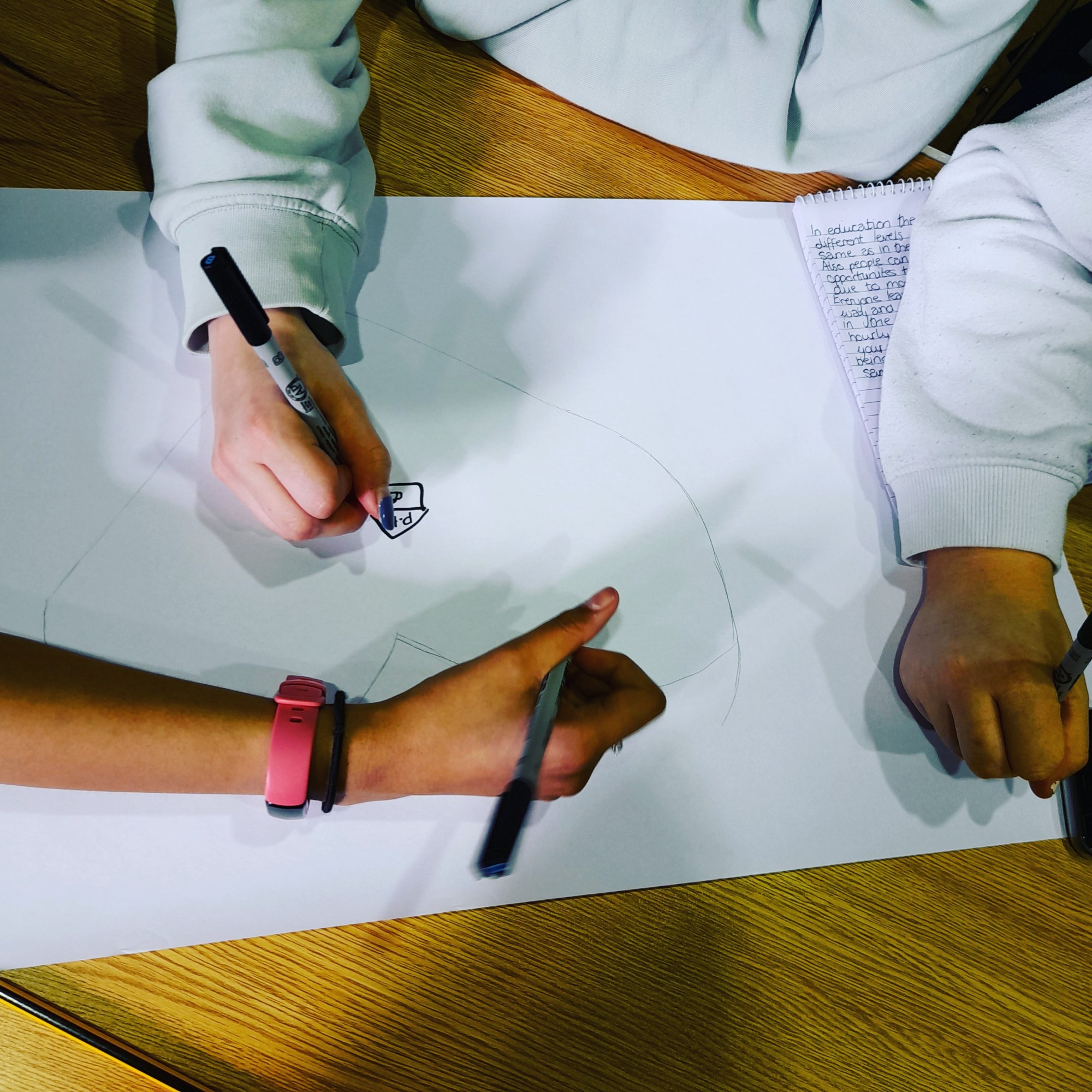
I work from an understanding that everyone arrives with bias, conscious or unconscious. When I work with a certain group, I take the time to reflect on my own assumptions I have about this group. I read up on any data surrounding this group, search for any material that may capture lived experiences of this group or engage with training to help me understand their needs. This in itself challenges my bias and helps me make informed choices in the planning of this session. It helps me understand where our lived experiences may cross over whilst also respecting that there are differences between this. Raising the Fantastical at its heart is about cultivating play – knowing what topics may feel harder for both me and/ or the participants allows me to risk assess if this will support safe, joyful play. I also feel I should caveat that this learning before meeting participants, works simultaneously with actively listening to the people who are actually in the room.

Stick to Structure 

It’s a two way street here. I will keep to the time, date, location and expectations but I also need to ensure that anyone I work with (participants or partners) will also do this. Things change – I get it and sometimes sticking to the structure is challenging, but maintaining this structure and declaring any changes up front with notice allows me to relax into the creativity as much as the participant.

Pay

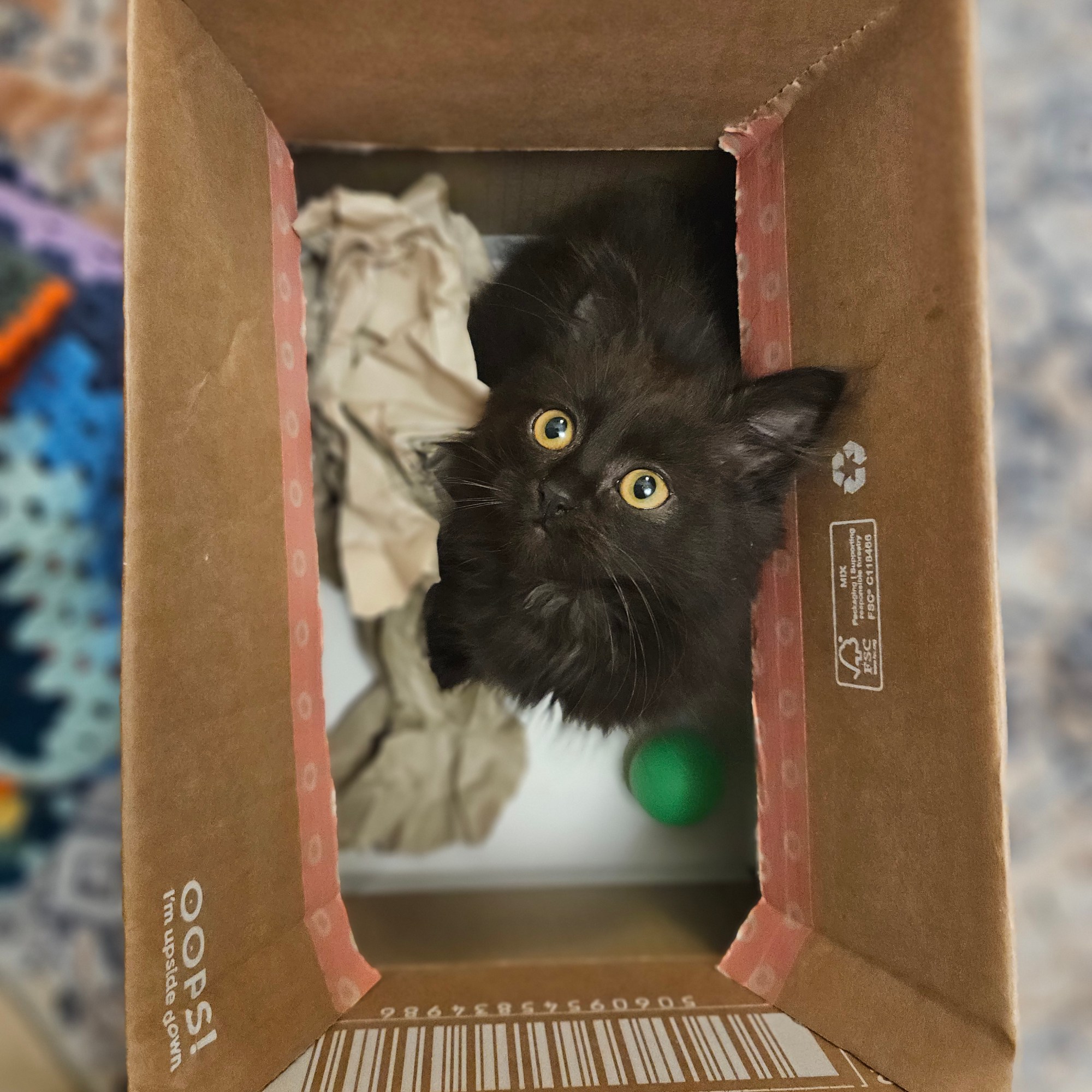
A much debated topic where it feels very hard sometimes to determine what our  financial worth is but hey! There are unions that can help determine this. I am a human. I have bills to pay, food to buy, a car that needs petrol, children to care for and a lovely kitten too. Pay should be clear and if you don’t know how to price some work, ask. I’m looking to earn a fair wage appropriate to my level of skill, experience and time for the work carried out.
Peer Support

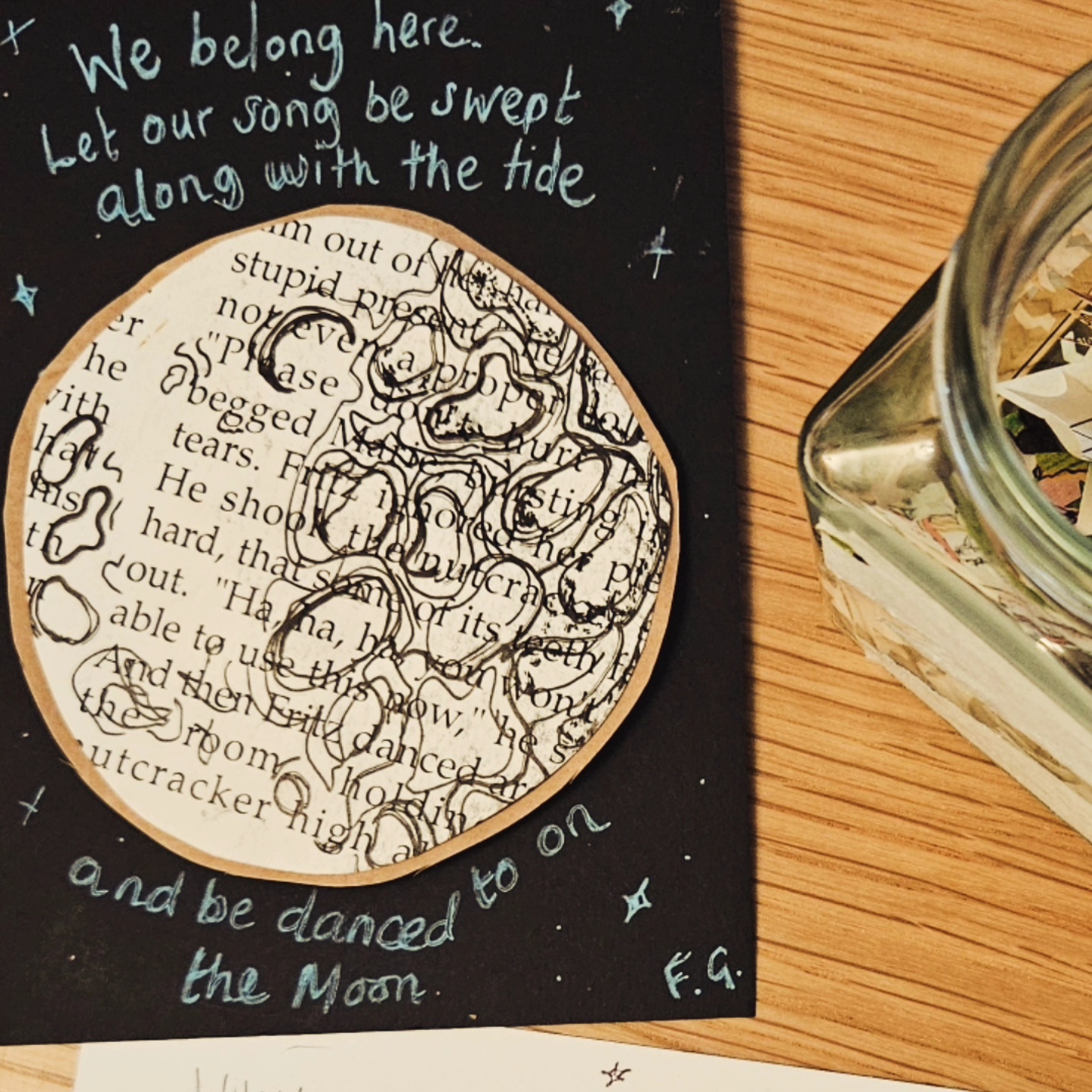
Sharing experiences (whilst respecting participants’ privacy) with fellow community artists is so important. We are all often busy rushing around from one job to the next but taking time to pause and reflect with those who work similarly to you really helps. This isn’t just about talking about the challenges, it’s also about sharing the triumphs too. 

Rest

I know you know. I know I know but we have to say it – we must rest. I will not be able to maintain good professional standards if I am exhausted. I really struggle with stopping. Hyperfocus kicks in, my mind is flooded with thoughts, ideas and working with people with complex lives is humbling and the take home is higher. Rest for me looks like a meander outside taking notice of what’s around me, collecting shells or sticks, spending time in the woods or on a beach. Committing time to doing this regularly as part of a pattern of my week for a few hours is what makes me a reliable, flexible and kind worker.

What in the world…

Being informed about world events helps maintain standards and boundaries. What’s trending on social media? What’s being reported in the news? What isn’t being reported in the news? What’s happening locally or globally? How does that make me feel? How might it affect the culture in the room I work in? What algorithm am I stuck in? Self awareness of my context and acknowledging this supports good practice 

Radical kindness towards myself is as important as radical kindness towards others. It is a pillar of my practice that helps to raise the fantastical. 

You can read about one of the ways you can raise the fantastical here: Raise the Fantastical: How to start…
Categories
Creativity Discussions Education Exercise Raise the Fantastical Story Telling Writing

Raising the Fantastical: How to start…
How do you know where to begin?

A List- a simple list can be the gateway to something grander.

Let’s start with your shopping list. I write mine in the order that I move through the shop. When I first walk in the fruit and veg is right in front of me, so that’s what my shopping list would start with…

Carrots, peppers, potatoes, apples, satusumas, cucumber.

How do you write your shopping list? Do you write it or do you wing it? I know this may seem mundane, everyday or even *gulp* ordinary but the ordinary stuff is important – rituals, routines, habits that ground us.

So let’s pick something from my list. I’m going to focus on potatoes. Now, I love potatoes, don’t you? I hate sweet potatoes. I’m talking about white potatoes. The little baby ones we buy every week without fail.

So now I’m going to write another list- a list of describing words for potatoes.

Brown, tasty, roasted, mashed, chipped, spil, blemish, eyes. EYES!

Eyes have caught my attention to be honest. A long time ago, I spent a 6 hour unwaged trial shift in a café in Napier in New Zealand.

My quest: to prove I was worthy of a job.

My job: to remove the eyes from old potatoes.

I failed my quest but this isn’t the story I am ready to tell. So I’m gonna leave that memory for another day…

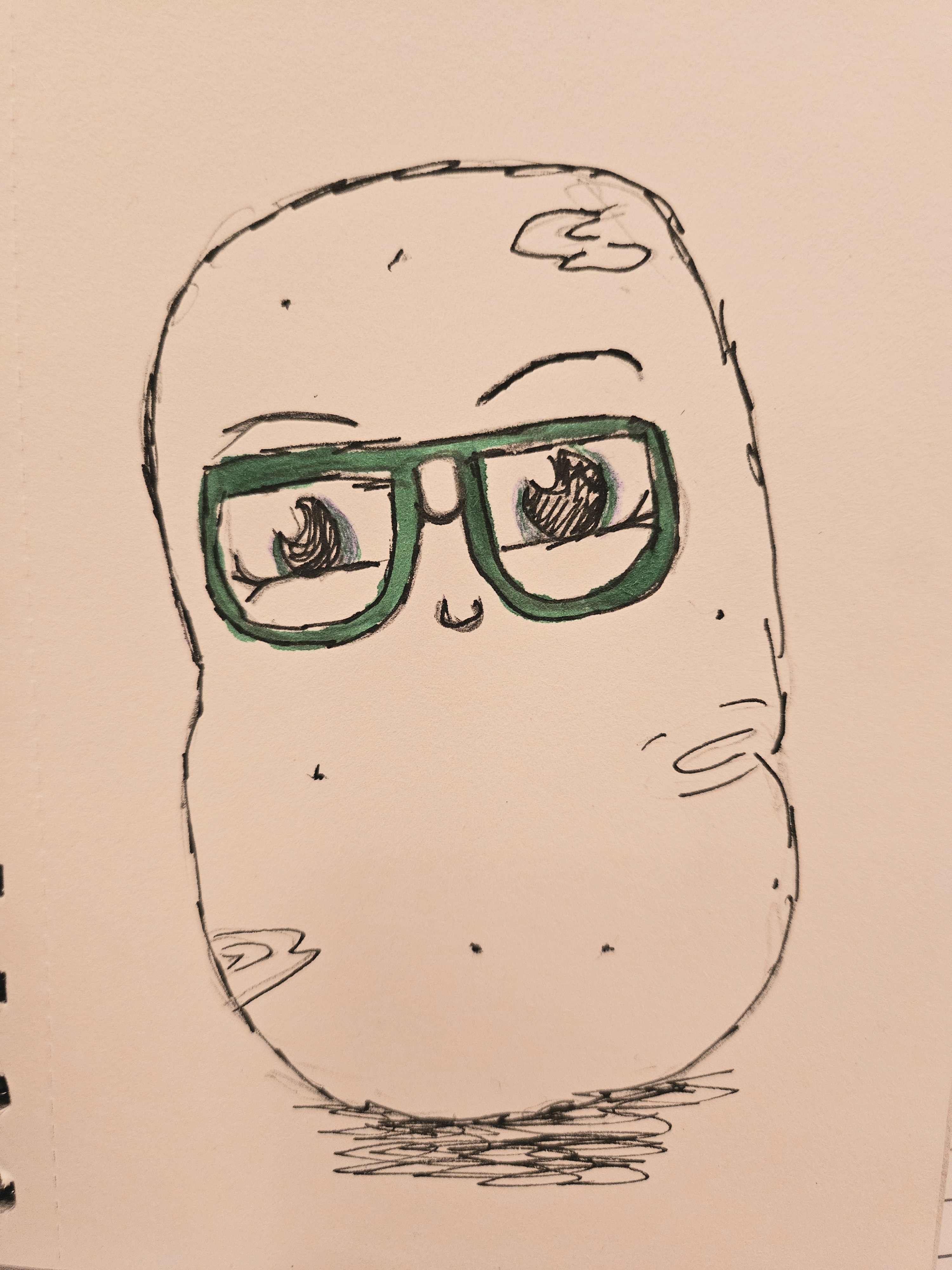
Eyes caught my attention because it made me think what if potatoes had actual eyes. Not weird growths but actual eyes. What colour would they be? If they grow underground, do they even need eyes? Do they need glasses when they drive? Hang on, my questions have started to step off to the fantastical. So you could try writing some questions too. You could start with 10 – allow memories to run, use what ifs to conjure the fantastical. If it feels silly, good! What’s wrong with that anyway?

So in simple terms

  1. Write list 1
  2. Pick something off list 1 and write another list of describing words.
  3. Ask some questions about this item?
  4. Enjoy yourself!

Don’t worry about absurdity or whether or not the questions can be answered.

Don’t worry about your handwriting or your spelling or your grammar.

Don’t worry if it’s good or not.

You’ve just started.

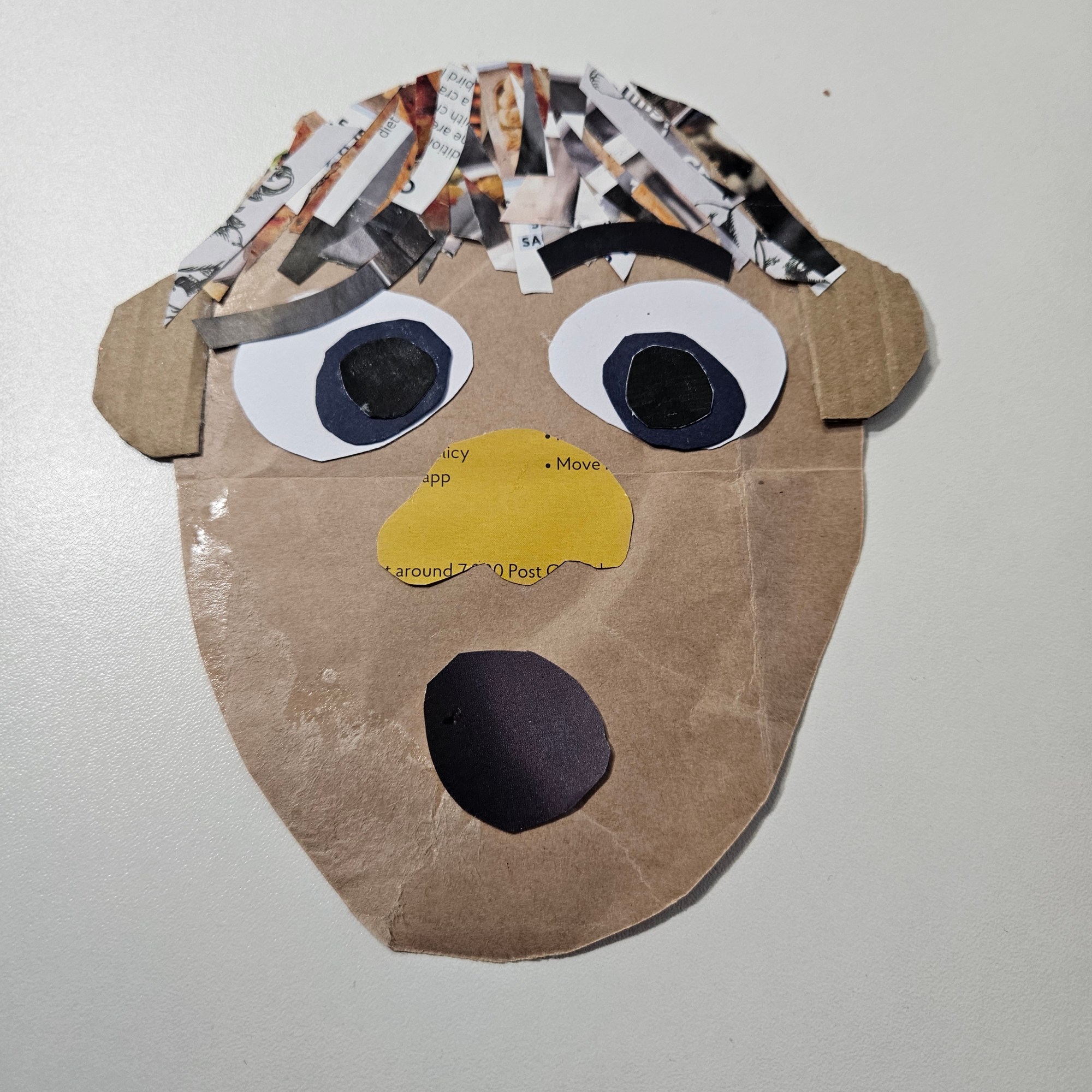
And if you are wondering about a potato with eyes still, I offer my humble drawing…

Categories
Change children Creativity Discussions Family Listening Opinion SEND song stories Story Telling

Meteorite

Sometimes when you are looking for a story, you can’t find it and yet you can see the need for one everywhere you look.

I have a autistic daughter. The journey to understanding and supporting her has been relentless and remains ongoing. We are lucky she attends a brilliant school with an extremely humble, caring and conscientious SENDCo. Like many families with a SEND child, it has been hard and we have experienced the underfunding that everyone is talking about through a lack of provision of health services and the arms length distance we are held at when it comes to getting practical support and advice.

If you have slipped on the stairs, whilst holding your baby, you body reflexes take over. You pull the baby in close shielding them from the fall with your body as you back takes the bumps, the scratches, the carpet burn and the awful twists. That’s what this feels like. but where the fall is over in seconds, this goes on for years.

I have written this story to share a tiny window into our world. It’s always hard to share personal information about yourself, especially when it comes to your children. 

I hope that it builds better empathy to those who created the complex systems that we have to navigate for our children to have experiences in life that are meaningful and bring joy. 

I hope that it brings comfort and recognition to parents going through similar experiences and I hope that you know, that no matter how lonely or futile things can seem, you and your children matter. I’m going to keep telling myself that anyway.

Help us create an education system that works for everyone:
https://www.change.org/p/reform-the-send-education-in-the-uk

Categories
Change children Creativity Discussions Education Grimm Public Speaking Secondary Story Telling Voice Workshops Writing Young People

Red: A Dystopian Fairy Tale

A retelling of a tale you already know.

Informed by ideas gathered in workshops with young people and children, Red: A Dystopian Fairy Tale is a spoken word piece about an imagined futuristic world ruled by a totalitarian regime known as Mother.

A world building workshop is available to book exploring Dystopian fiction. You can read more about workshops here.

Categories
Change Creativity Discussions Family Listening Story Telling Workshops Writing

The Invisible Women

Peggy Seeger – The Invisible Woman

Watching Peggy Seeger’s singing, I hear the voice of the many older women who I am lucky to have in my life. I have been running creative writing workshops for Davenham Theatre and through Stitch. It really strikes me that the majority of participants are women who are over the age of 55. These workshops are open to anyone to come and yet we see these women loyally attend. They are grateful and positive and tell me that they get so much from the sessions.

But here is something that I think these women would struggle to accept from me. They have amazing insight, they care so deeply about the world they inhabit and their stories are beautifully compelling. It is a gift to spend a couple of hours with these women and listen to their thoughts. I have this amazing tribe that are now my friends.

One of the challenges that many writers face is the fear that anyone will find their work interesting or relevant, it is certainly something I feel at times. However this feeling is rife in this community of women and I think when you listen to Peggy Seeger singing, you can understand why.

Extract of Tell Me A Story of a Chair by Liz, a project by Stitch

My own mum told me that as she has got older, her visibility has dropped. That people pass her by without even seeing her. During the Covid Pandemic, we have all been locked away from each other, unable to meet up in public spaces. Those shielding even more so. We have collectively lost sight of many who are not in our immediate circles. The Invisible turned into memory.

As we emerge from this lockdown and Britain reopens its doors, let’s make sure we have room for everyone at the table. If you are an older woman who is feeling invisible, please tell your story. We need the grandmother’s wisdom now more than ever. If you are not an older woman, pull up a seat and look at ways to ask and listen. Let their stories inspire your story. You’ll feel richer as a result.

Lost Light by Denise for This Is Something That I know a project by Stitch
Categories
Change Discussions Family Workshops Writing

Missing

I am walking through a hall. A large hall, with high ceilings, pillars and archways. Everything is made of glass. The hall is full of glass statues. Some are of people I don’t know. Most are of people I do. Some I know really well, like my two friends from drama school. They’re sat next to each other on a bench. They are wrapped up in hats and gloves and scarfs. They are holding a takeaway coffee cup in their hands. Their heads are thrown back in laughter. There is a gap in the middle where I should sit, if I was made of glass, but I keep moving around the room.

Amongst these glass figures are people I have worked with. There is the little boy, who told me all about his pet dog in the last workshop I ran in February. Max, the dog was called. I remember how the boy’s eyes had sparkled as he talked about looking after Max. The statue’s eyes seem to sparkle too.

In the middle of the hall, is my brother and his wife. They are stood next to each other. They look like they are watching something in the distance. Maybe it’s their own dog, Biscuit. I pat my brother on the shoulder. He’s cold. Freezing. My fingers burn from the cold. That’s when I realise they aren’t made of glass. They are made of ice.

I stare at the frozen figures around the hall and realise they have the glisten of frost. I see that they are my relationships that are frozen. The relationships that don’t develop because of the time that I don’t have, the spaces that we cannot share. I become Demeter, waiting for my daughter to return, in a long, hard winter.

Spring will come and with it vaccinations. Those relationships will bloom with the crocus and daffodils. By the time we start planting out our seedlings, we can maybe hold space for one and other. I will be there. Waiting amongst the spring blossoms.

Demeter

The ground is hard

My footsteps create earthquakes.

My grief sends waves 

Down through the ground

Trying to reach you. 

My tears fall

Silently.

They kiss the grassy meadows

Where you once played

And turn into glistening frost.

You will return.

And so will I.

We will sit 

In the apple tree again

Creating blossom showers.

Waiting for the first 

Apple to ripen.

Categories
Change Discussions Education Listening Opinion Story Telling Writing

The One

Taking down evil in storytelling is quite often presented as an individualistic action. A hero will defeat a villain. These characters are binary. The hero is good and the villain is bad. This narrative has been served up to us time and time and time again. Even when we get told stories about a group of people battling another, this is quite often reduced down to leaders.

However banishing the monsters of this world is a collective effort. For so long, we have been living in a story of a pyramid. We have been consumed by the notion of the ‘One’.

The one who rules us. The one who stole our heart. The one who cast dark magic. The one that got away with it. The one that saves us. The one that had roast beef. The one that had none.

It is an isolating view of the world and it stops us diversifying what we know, who we know and how we learn. It comes with an enormous pressure. For those that are the one and for those who are not.

When we look at the moments when there was a pivot in society, we would see that those moments are built on ‘We’ and ‘Us’. Not ‘I’ and ‘me.’ The Civil Rights movement, the Suffragettes, School Strike for Climate, Black Lives Matter. These were built by grass root collectives.

Good and just society is neither the thesis of capitalism nor the antithesis of communism, but a socially conscious democracy which reconciles the truths of individualism and collectivism.

Martin Luther King Jnr

So let’s start telling stories where people come together to ask for a better life. Let’s hear stories which aren’t about ‘the one’ but are about ‘Us’. We will discover other ideas and other people and we may even find ourselves sat in their stories in ways that surprise and delight us.

Categories
Change Creativity Discussions Story Telling Workshops Writing

Creativity and Collective Curiosity

The term collective curiosity has been swilling around my brain for the last week. I think as we are for the most part currently sat in our homes, it can be hard to connect with what other people are wondering about.

One of the things I love about running creative workshops is hearing that amongst the different views and voices and experiences that make up a room, we can normally find a sense of collective curiosity. Collective curiosity is the notion that we have shared ideas that we all wonder about. The power of this collective curiosity is not to be sniffed at. The room could have different opinions, unique takes and understanding, but the feeling that you are all explorers, learners, creators unites the room.

“Curiosity is the engine of Achievement.”

Sir Ken Robinson

I have been delivering online workshops for the past 6 months. Yes, there have been things that are not as easy. Yes, it has been difficult not connecting and being in the room altogether. As a lover of people, I have found this enormously hard. However, there is still the sanctuary of coming together, creating and engaging a shared curiosity.

So if you have been sat at the edge of the pool, looking at that refreshing water and wondering whether it is worth dipping your toe, dive in. The water is just the right temperature and lifeguards are on hand.

There are many artists and organisations offering ways to engage. I promise that it is worth coming and stretching those creative muscles and finding a collective curiosity.

Categories
Change Creativity Discussions Education Opinion Story Telling

In a Desert

I am in a desert. I am thirsty.

I am thirsty and I am in the desert. I am not sure how I came to being in the desert. At one point I was in a room full of people. Some of those people where those that I love and some were people that I hadn’t met yet. The room was full.

Then someone turned out the light. The colour drained to blackness, the noise of all of those voices were silent, I couldn’t see. I didn’t seem able to move. No I could move, but I might as well of not bothered because it remained black. Sometimes the sound of my own breath was deafening. I slept and slept and slept.

When I woke I was in the desert. The light was bright to begin with. The sun burning my eyeballs. I had to cover my eyes with my hands and let my vision adjust from darkness to light.

Sand got everywhere. Everywhere. In my mouth, up my nose, in my ears and the fibres of my clothes. I didn’t notice that I was thirsty then. Although I probably was. I was dealing with the sand. So I lifted my t-shirt over my nose. To stop the sand blowing into my mouth. The days were hot.

The night was cold and long. Sleep escaped me. Underneath that blanket of infinite stars that shone in the velvet blue sky, I felt lonely.

I am haunted by memories of place where space was held for thoughts, beliefs, experiences. Where things were weaved, stitched, spoken, drawn, constructed. Where people came together.

I am in the desert and I have been here for some time. I have tried walking forward. Tried to find water. Tried to find people. I guess I need help. I think others may be in a desert too. So maybe be if we shout into the silent night sky and sign our names in the sand, we can find water. Water for everyone.

An open letter can be found here that asks Secretary of State for Culture, Media and Sport, and to the board and staff of Arts Council England to open a dialogue about the problems facing community arts. If you are a community artist or an arts organisation that supports participatory arts, you may want to add your voice.

If you are not a community artist, but want to support, please consider writing to your M.P. and/or the Secretary of State for Culture, Media and Sport. It may be helpful to talk about your experiences as a participant on a community arts project. You can find their detail and write to them here.

Categories
Change children Creativity Discussions Education Family Listening Opinion stories Story Telling Writing

Music is Music

This afternoon, I entered into a Zoom meeting with composer and musician Tayo Akinbode, hosted by Z-Arts. Being a storyteller, can be a lonely process and we are living in a lonely time, so it was great to hear about how Tayo creates music to tell a story.

One of the thoughts that regularly swills around my head is around the difference and similarities between working with children or adults. It’s a question I get asked regularly moving between these different groups that I work with. It leaves me a bit stumped as other then a slight modification of language, there is no difference. Children laugh and so do adults. Adults struggle crossing the creative threshold and so do children. Both children and adults want to hear and tell stories. So it is a relief to hear someone as experienced as Tayo say ‘I wouldn’t dumb down music for children.’

I have finished writing the story of my family ancestors. A project I was inspired to start after working with Emily O’Shea company, On The Border. I am now in the process of editing the story into an audio experience and it is a relief to be piecing the story together. The writing process has been difficult. The vision I sat down with was to create a piece of audio storytelling about my great-grandparents. They were performers at the turn on the 20th century who went on to manage some of the first variety cinema’s in the country (a mixture between Music Hall and Cinema). Before I sat down to research, this part of my family had mythical qualities. I wanted to use Music Hall numbers in order to help tell their story. I wanted this to be a piece for family audiences. Something that could be enjoyed with everyone – an intergenerational activity. That you could listen at a distance together with your elderly granny who is shielding and your 8 year old nephew who is home schooling. That it would open up conversations about family stories in a way that I could not have with my own grandparents. I was going to use this idea to develop my creative practice, to experiment and play.

But the doubts creep in. Will children get this? Is the music too bawdy? Am I just inventing truths that I cannot find? Is this material appropriate for family audiences? Nothing kills playtime like doubt and nothing makes experimentation more pointless then isolation. So thanks to Z-Arts for providing connection and thanks to Tayo for grounding me and reminding me that children are no different from the rest of us, which in my wobbly, lonely, creative moments I forget.

Solsbury Hill

I grew up in Reading and we had family down in Bath. When we drove down to see them in Bath, my Dad would play Peter Gabriel’s albums. We loved the track, Solsbury Hill. We used to drive past Solsbury Hill on the route to see our family. We used to climb up it (when you could). We loved that song. We’d ask for more Peter Gabriel. We’d listen Red Rain, Don’t Give Up and Games without Frontiers. We did not hear the loaded political meaning in these songs. We didn’t here the meanings that I as an adult now hear. Tayo told us today ‘Children like Music.’ Its a simple statement, but it is an easy one to make. No matter how much I see my children request Michael Jackson (their Dad’s favourite) or sing along to Fleetwood Mac (Rumours is my go to Album), in my artistic process my lived knowledge gets crowded out by my doubts over how to execute an idea. I managed to create children into something ‘other.’

That is why I love working creatively with children. They remind me that we are all not that different from each other. I’m looking forward to Z- Arts opening their doors again so I can be reminded of this by the real child experts, the children themselves. Until then, I will keep going. Clumsily put one foot in front of the other.

After all music is music to be made, all stories are stories waiting to be told and all humans are humans waiting to be heard, no matter their size.

This project am I am working on has bee made possible by funding from the Arts Council Emergency Response Fund. The funding has allowed me time to develop my skills, conduct research and connect to other artists. My thanks go to Z-Arts for providing free access to these conversations and understanding that these conversations are needed.