There are many things that I love about Christmas and I find that I am a late bloomer of love with it. As the day draws nearer and I look beyond the things I ‘have’ to do (present wrapping, present shopping, more wrapping, food buying, more wrapping, checking lists, checking them twice.), I am reminded of the things I love and surprisingly it’s not the vast amount of food. It got me thinking about how the world might seem a bit brighter if we exported the values of Christmas to other parts of the year.
1. Festive Family Fun
The world just opens open up for things for families to go and do together, big families or small families, young families or older families. From ice skating to crafting to visiting Father Christmas. Most people will be heading to some kind of theatre, whether its a traditional pantomime, or a magical tale or a relaxed romp for the little ones. Theatre’s (both conventional and others) through open their doors and the community descends. Here’s the thing, their are plenty of theatre’s opening their doors the rest of the year for family audiences too. Some of the smaller theatre’s host beautiful and intimate family shows and having the footfall at these places that the traditional christmas show has, could allow these companies to go further in entertaining your family.
2. Singing
City corners become the temporary dwelling of choirs and small groups, people hum along to the brass band, everyone knows the words to Christmas songs, whether its Mariah Carey or Slade. I had a realisation in a singing group for toddlers the other day that I was resisting singing the Bruce Springsteen version of ‘ Santa Claus is coming to town”. If anything makes people feel better its the singing. We have scientific evidence to support this (http://www.bbc.co.uk/guides/zcc7tyc), you don’t need 3 eggnogs and a baileys to slur your way through Last Christmas at the staff Party. You could join a choir, go to open mic night or head out for Karaoke. Sing with your kids, sing to your Nan, your Brothers, your Dad!
How happy does this dog look?!
3. Food
As I said above not the quantity (although that is great too), but all of sudden the most unexpected people are talking in culinary wizardry. They did 3 birds last year, this year their trying 5, their taking notes on Masterchef and Nigella. They have soaked the fruit for the christmas cake from the 27th December last year. the world is full of surprises, but gastronomy at Christmas is perplexing. Your Uncle Brian who doesn’t even know how to scramble an egg, is quoting Heston Blumenthal on making the perfect Persian Spiced Christmas Pudding. I mean, come on Brian, you thought Cumin was something very different in May! However if Uncle Brian rocked out those persian fusion dishes the rest of the year, then I’d be round his house for dinner more. (I don’t actually have an Unlce Brian.)
4. Goodwill
Friendly, helpful and a co operative attitude. Can you IMAGINE?!?!? This would be a completely different country right now if Goodwill was rolled out year round the way it is at Christmas time. We might notice each other more, we might stick up for each other more and we might listen more. This has been complicated by the boom in social media. We now have a soap box in which we can reel off our thoughts, without maybe a backward glance to what we wrote a week later and who we may have hurt in the long run. If we could share our opinions in person, I think we would be more understanding to one and other. We would find a way of working through difference co operatively. Social Media can be a friendly place, and many people are full of Goodwill year round, but if was there in the way it is at Christmas, I’m sure we all wouldn’t be looking at Scandinavia so longingly.
5. Charity
Here is where social media is an incredibly powerful tool. My Facebook newsfeed is filled with folk sharing the work of charities that they are supporting. From Lemn Sissay’s Care Leavers Christmas Dinner to Shelter, from local level charities collecting Christmas Hampers for those without, like Barakah Food Aid to funding campaigns like Bloody Good Period who bring sanitary products to women who can’t access them. It’s brilliant and inspiring to see all these forces of good and people getting behind them. Wouldn’t it be brilliant to see our level of generosity and action rolled out through the rest of the year?
So unlike Wizzard, I’m not wishing for Christmas every day, but I would like the positivity and the great atmosphere that this time of year brings to the forefront.
Although listening to The Darkness, Christmas Time, throughout the year would be great.
I stumbled across the above quote, and it resonates incredibly powerfully. Early on this summer I completed a course called The Performer’s Playgroundwith ClownLab. It was a 12 week exploration of playfulness. We had a lot of conversation about finding the joy or the fun in something and enjoying being beautiful even if we were playing something ugly. How do we create fun or channel playfulness?
On reflection, I think the things that inhibit me are the parameters that I have either set myself or the the ones that I have allowed others to set for me – ‘the table of do’s and don’ts‘ as Pullman calls it. There are a list of things I can do and a list of things I can’t do. I wrote a while back about Growth Mindset, the idea that through a shift in personal attitude can alter our potential. How do we know that our personal attitude needs to shift? How do we believe that our potential is unlimited?
Neil Gaiman wrote in Coraline “Fairy tales are more then true; Not because they tell us the Dragons exist, but because they tell us that Dragons can be beaten”.
illustrations by F. D. Bedford J.M. Barrie’s Peter & Wendy
Stories allow us to see that we can do, or be anything. Some of our favourite characters in our most loved tales and stories have the hardest start; they are orphans. Harry Potter to Cinderella; Superman to Peter Pan; Mowgli to Sophie in the BFG. Their world has been disrupted in a way that no one would want for a child. Yet, these characters go on amazing adventures, and overcome huge obstacles and show a resourcefulness and resilience to find their way through. Peter Pan has no ‘list of right or wrongs’ just a love of play and make believe. His game playing allows him survive and outwit his enemies.
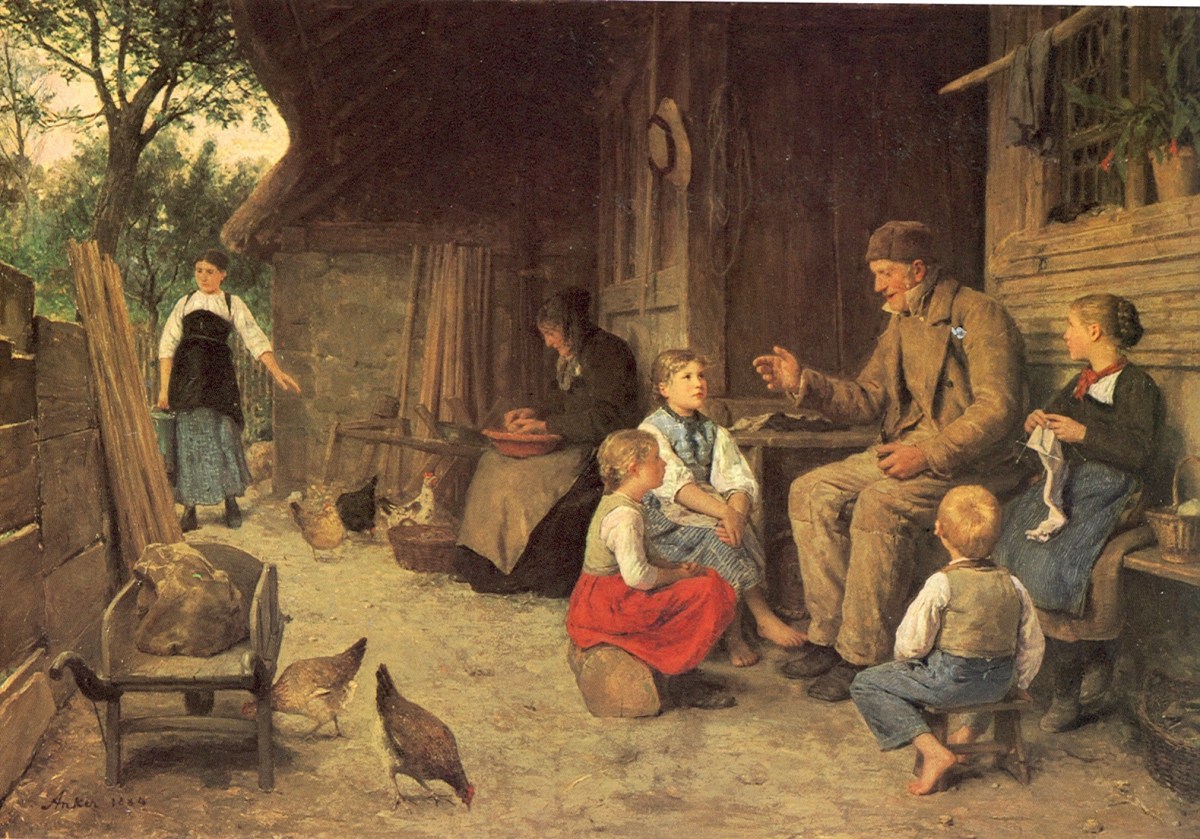
The art of oral storytelling transcends age, ethnicity, education, borders and gender whilst also recording and reflecting our difference in those things. This kind of storytelling is a shared act between teller and listener. Jane B. Wilson tells us in her book The Story Experience, “Those who tell tales are both speakers and listeners. They have heard and remember”.
We are all storytellers and we are all listeners, if we allow ourselves the possibility to listen. We can all believe that we can do more, be more then we think we are. If we see others have defeated the bad guys, maybe we can too.
“The listener is caught and whirled into a talk, living for a single moment in the good, the great, the naughty, the lost. The tellers voice awakes dreams and spins stuff for thought; incites to contemplation.”
Like the idea that all the infinite possibilities that women could pursue
is whittled down to the same principle of picking your dinner.
Too many choices.
When you go to a one of those big pub chains and you unfold the double sided 5 paged and your like I don’t know what to have there are just too many choices
That’s just the way that women feel.
Me.
I’m a woman.
That I don’t know whether to have the lasagna or the salad.
and I’ll spend ages thinking about it
and the waitress comes over
and I ask for more time.
And lasagna or salad
lasagna or salad
salad and lasagna?????
And just when I’m convinced the choice is whittled down to two and I’m just about to leap off and commit to one
I see it.
The Mexican section.
And its there and I think what ever was i thinking going for lasagna when i could have an enchilada
or a burrito
or a fajita?
Then I think well aren’t these things all the same thing?
Just wraps in different varieties?
And they have a whole section on wraps.
And I love wraps.
They are all there.
Duck in Hoisin Sauce with iceberg lettuce and cucumber
Southern fried chicken with BBQ sauce
(less bothered about this one)
Chicken, bacon and tomato.
And Oh Mer Gerd!
They have goats cheese. With beetroot and carrot and baby spinach.
That does sound great.
Yep really good.
Like well tasty.
I mean it is a bit of a risk.
having something with that little ‘v’ next to it in a pub that could probably fund its own abatoir with the high levels of meat on this menu.
but no this is good.
great actually.
yep and I’m sure that’s what I’m going to say as the waitress comes over but when she says
what would you like?
It just happens
the words just fall out of my mouth
and I say a cheese burger in a brioche bun with onion rings and side salad and skin on fries.
I was thinking I would be logical and deliver this series of blogs alphabetically but it actually turns out that my creative brain won’t beat to the drum of alphabetical order!
Here I am, jumping in at the letter M! In one to one coaching I am always finding that people’s opinion of their own voices is actually a bit of a barrier when it comes to working on their voice.
Your voice is a deeply personal vessel, that centres you and connects you to the world around you. Maybe someone has made comment on you voice previously or you feel you struggle to be heard? Maybe you really don’t like the sound of your own voice? Maybe some people’s voices are better then others.
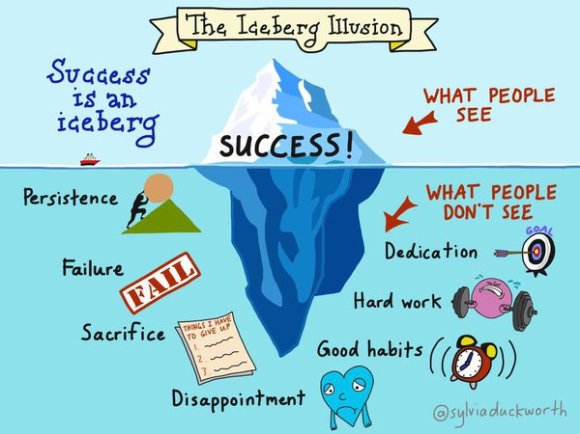
This last idea is a common thought. A good speaking voice is a natural talent. Some people are just talented. It makes me think of the Iceberg analogy of only seeing what’s above the surface….
I don’t believe that a strong speaking voice is a birth right belonging to a lucky and articulate few. Like anybody can sing, anybody can find authenticity, connectivity and confidence in their voice.
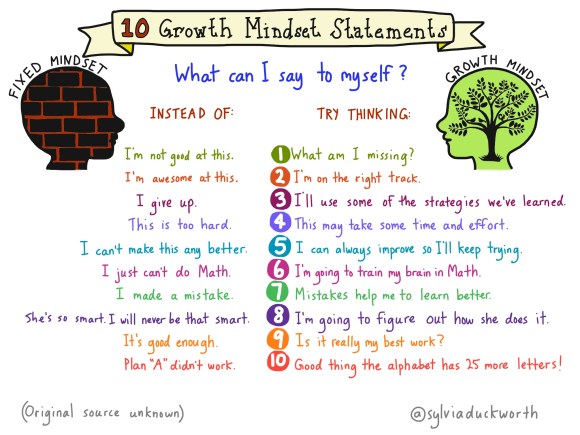
However the first step on the journey to finding your voice is most likely a case of changing how you view your voice. Dr Carol Dweck, psychologist, coined the terms ‘growth’ mindset and ‘fixed’ mindset. It looks like this:
This principle is obviously applicable to more then just your relationship to your voice, it’s to do with your outlook on yourself and the world. Growth Mindset is simple, accessible and possible for all. We just have to put it in to practice.
We consume books at a fast rate in our house and the titles below are well and truly tested on our two children. The eldest is an avid reader and has always liked sitting with book or youngest happy if there is nothing else to do, but would rather explore turning pages as suppose to looking at pictures. The books that made the list, had both of them gripped and are the ones that often get requested to be read that don’t make us Adults feel bored.
Me – Emma Dodd
This is a beautiful book and I love the simple designs and the simple words. Emma Dodd has an amazing ability to create depth and feelings that communicate the love between parent and child. It’s the perfect gift for new parents who are feeling overwhelmed by the never ending demands of a small person
Rosie’s Walk – Pat Hutchins
Words are few and tell a simple story, the pictures however tell something quite different. first published in 1968 and filled with yellow, oranges and browns, this book tells us that good illustration can make a book timeless
Each Peach Pear Plum – Janet & Alan Ahlberg
A simple story in verse that has lots go things to hunt for in the pictures. With all the different characters from famous fairy tales and nurses rhymes featured, this is a great book for triggering other stories and songs.
Oi Frog! -Kes Gray & Jim Field
This book is a great one for silly voices and having fun with language. As a voice teacher,it appeals in the same way that Fox in Socks does for older children.
The Lion Inside -Rachel Bright & Jim Field
My parents gave this book to out youngest for Christmas, I love the message behind bandits great for talking about being brave and scared.
Grrrrrr – Rob Biddulph
Really nice for expelling competition and playing fair. Also for underlining that success isn’t everything.
Oh No, George – Chris Haughton
George is a dog who keeps getting into trouble. A great read for consequences of action and perfect for you little one who loves throwing their food on the floor!
What the Ladybird Heard – Julia Donaldson & Lydia Monks
This book has glitter, farm yard animals and a brilliant story! That ticks about every small child box, right?
The new year came, and the new year went and all the reflections and plans you made fizzle out as you realise you’re cash strapped, cold and cranky. You’re past the shortest day of the year but daylight is still a fairly elusive time. The quantity of cheese you have consumed over the christmas period is now turning on you and making you realise that having a baked brie every other day was probably not your best decision. As for this new year’s resolutions they are gone, gone, gone as you motivation slips away from you.
I keep it simple this year: Don’t get down because it’s January. The 11,033 days that I have had treading on this earth, have been filled with words of how awful January is. Whether its January, June, Hot, Cold… So this year, i opted to not be to hard on January. It’s not January’s fault, it comes when it comes. But here I am, not even half way through the month, having a serious chat with January.
Me: Now, you listen to me January. I was really willing to give it a go this year. Make it a really special month.
January: Oh, how lovely.
Me: It should be, shouldn’t it? But no. Its cold and dark and windy and wet.
January: Well yes. But thats not my fault. There are plenty of places in the world, where it is January but its actually hot.
Me: Yes, but everyone is so grumpy.
January: Again not my fault. You all had a great time in December living it large, life of Reilly, but now you have to get on with normality and its a comedown. I didn’t tell you to live ostentatiously at christmas. Did I?
Me: Well –
January: No. I didn’t. I am just a month at the beginning of the year. You’d think that would be great, but no one wants to know. Unless your Kiwi. Do you know how exhausting it was last year when everyone was blaming me for taking David Bowie and Alan Rickman? No, you never stopped to think did you? It was all about how awful January has been to you. Well maybe its time you start thinking about how awful you’ve been to January.
Following on from this enlightening conversation, I think that maybe we all suffer from feeling out of control at this time of year, this is then heightened by failing at new years resolutions. I wonder if we reviewed our perspectives on new beginnings we could find that we are more the capable of making changes at any point. It doesn’t always have to be the big stuff. Its also fascinating the amount of resolutions that come out of not doing something. Dry January, not eating certain things, not flobbing out as much and not looking like we do. This is hard. Are we actually making it hard on ourselves. What if instead of saying ‘I’m NOT going to hate January’, I said ‘I’m going to write down three positive things that I have done everyday in January’. What if I let go of predetermine cycles of change that were not picked by me, I talk back some power and said I;m going to change today. I know January would like that. How about you?
Three Positives for today:
Teaching my first Home Education Class.
Watching a brilliant film, Song of the Sea, with my eldest and seeing her moved by beautiful story telling.
Realising that change can occur at any time, in any place in any one. We just have to be open to that idea.
I love books. They are unbelievably comforting and adorn my house in little piles. I find them incredibly hard to part with. The wisdom and escapism that books contain is a beautiful thing. I love reading lists of books too. Which ones have I read? Which ones have I yet to read? What should I read next?
I thought I’d share some books that I found really useful and enjoyable to read.
Presence by Patsy Rodenberg
This book is like three years of actor training whittled down into book form and made accessible for non performers. Its a brilliant insight in how to be in the moment more and is full of practical exercises to ‘perform’ at your best in an incredibly sincere and authentic way.
Finding your Element – Ken Robinson
Robinson is an educational guru ad talks about how we all have something where we are in are element. Using stories of how different people discovered their element, Robinson shows how we can have our eureka moment ourselves
Games for Actors and Non-Actors – Augustus Boal
This is like an arsenal of different warms ups and games to try out that liberate all, performer or not. In three sections, Boal outlines his method of Theatre of the Opressed, provides a wealth of different exercises and discusses problems that can arise in Forum theatre. This book should in every drama practitioners library. Anyone looking for group cohesion and release of expression could benefit from giving this book a read.
Finding your Voice – Barbara Houseman
This practical and easy to use book talks about the mechanics that go into speaking and the how you can galvanise your body to have a strong, rich and healthy voice. This book provides the foundation for a lot of the exercises that I now include in my Voice practice
Show your Work – Austin Kleon
Austin Kleon is an artist that works with words. His book Steal Like an Artist is also an excellent read. Show Your Work, talks about how to network effectively and efficiently in the 21st century. He describes it as networking for people who don’t really like networking. This book really made me think about how to develop a good web presence and how to share my process with an online community.
Wreck this Journal -Keri Smith
Smith should probably be proclaimed at Art wizard for the wonderful journalling books that she has created. They are a brilliant series but I love Wreck This Journal the most as it reminds us not to be to precious about what we create and that failure yields unexpected results.
Shakespeare Words: A glossary and language companion – Ben and David Crystal
This book will be tucked under my arm and is very well thumbed when I’m working on any of the bards works. Its a brilliant dictionary of language from when you can’t tell you greek god reference from your elbow.
The Playful Parent – Julia Deering
This behemoth of of a book is a plethora of ideas in playing with you kids. From Shampooing solutions to ideas for indoor play. Its a very practical tool kit and I think if parenting was to come with a manual, then this is the one I’d pick.
What Non-Fiction books would you put on your list? What should I read next?
Felicity Goodman is a Voice Teacher, Playologist and Story Teller based in Manchester. To find out more about her work, please visit www.felicitygoodman.co.uk
Play is a significant part of who we are as people. In fact, it is through play that humans are wired to learn. I love playing. I could play all day. I love games and songs and stories and dancing and make believe. Make believe is the best part of everything ever. But why is pretending to be a golden unicorn with ambitions to be the World Salsa Champion deemed as less then being a Doctor or a Engineer or a Fiscal Officer? I can see the significance of these roles in our society and I am not disputing their worth. They are in the hierarchy of professions though. They use our brains, in a way that we can quantify with money. Play is nothing in the face of medicine, technologies and finances. How have we got here? There are plenty of great thinkers who thought and still think today that play is an essential part of our make up. People at the top of the game in STEM subjects are saying that play is important part of innovation and discovery. However even if I was the best person at pretending to be a golden unicorn with ambitions to be a World Salsa Champion and I mean the BEST, I still wouldn’t be taken serious because make believe and play? Well that’s just for kids!
Basic Salsa, 1-2-3-4-5-6-7-8
Kenneth R. Ginsberg writes on behalf of the American Academy of Paediatrics, outlining some of the ways that Play is important:-
“Play allows children to use their creativity while developing their imagination, dexterity, and physical, cognitive, and emotional strength. Play is important to healthy brain development. It is through play that children at a very early age engage and interact in the world around them. Play allows children to create and explore a world they can master, conquering their fears while practicing adult roles, sometimes in conjunction with other children or adult caregivers. As they master their world, play helps children develop new competencies that lead to enhanced confidence and the resiliency they will need to face future challenges.”
(Kenneth R. Ginsberg, http://pediatrics.aappublications.org/content/119/1/182)
Most of us have a good understanding of the importance of play in our children’s lives. We look at the opportunities that we can present them with. We hear the generations above us groan about kids being kept indoors, playing endlessly at video games and watching rubbish on iPads while at the same time managing to do Dancing on Monday, Choir on Tuesday, Art on Wednesday, Spanish on Thursday, Football on a Friday night and then Mindful-tots on a Saturday morning. So our kids are either doing too much or not enough??
Ginsberg talks about both of these things in his article and tells us that Parents are being fed ‘carefully marketed messages’ that children need every chance to be their best through parents buying a variety of toys and materials and making sure their children go to a range of activitities. Parents are not only being told that this is good for their child, they are also being told that this is the definition of a good parent.
It’s hard though, to work out what is ‘right’ and ‘wrong’ and ‘good’ and ‘bad’. After all we are all new to it. We’ve not done it before. We’re sleep deprived. It seems to be working for others and don’t get me wrong some children do completely thrive in a bustling week. These classes are structured and adult led. There is normally no element of free play. The kind where kids play shop, or mermaids. Or have an afternoon tea party with their teddies or get to be the fastest footballer on the planet or the bravest explorer.
Free play that is child driven is essential to the development of negotiation skills and an opportunity for children to discover what they are interested in. For many adults, play is something done by those mini adults that walk around copying every gesture, phrase or grimace that we do. Play seems hard. We know all the rules. We have all the answers. We have pressures on our time to keep the ship running smoothly. We have an idea and we suggest it to our children and then what?
We all just have to be careful about why we are setting up activities for our children. What might we be missing out on by keeping everyone busy and on the move. Our children need it yes, but we, the parents need it too. We need time to learn about our children’s likes and dislikes, we need to learn how to socialise and share and negotiate. We need time to cool off and unwind. Our children need to see us do this so that they do it too. Finding our love and comfort in free play is as necessary for our children to witness, as our children doing it in the first place. Our kids won’t see the point in it if we don’t.
So playing? Playing is more than stuff for kids. We need to let our children play freely and get on board with them. Let them decide the rules. If you’re not sure what that entirely means, I want to take you back in time to the late 80s in the Goodman household. There we all are: Big sister (7), big brother (5) and I (3) in the fun loving hands of our favourite babysitter -Wendy. We are wearing a rainbow of shell suits. We’d just finished watching the Never Ending Story on BBC 2.
Big Sister: Let's play a game.
Big Brother: Yeah, let's play a game.
Me: I know a game.
Big Sister: Really?
Me: Yeah.
Big Brother: Bet you don't.
Me: I do.
Big Brother: No, you don't.
Me: Yes, I do.
Big Brother: No.
Me: Yes.
Big Sister: What is it then?
Me: Kangaroo
Big Sister: What's the rules?
Me: Whoever jumps the highest wins.

Big Brother and Big Sister exchange a look.

Big Brother: Fine. I'll go first.

He jumps. Big Sister jumps. I climb on the sofa.

Big Sister: WHAT ARE YOU DOING? YOU CHEATER!!
Me: I never said that I couldn't jump off something.
Big Brother: Fine then, I will jump off this chair. And be higher then   you.
Me: NO.
Big Sister: What? Why not?
Me: THOSE AREN'T THE RULES.
Big Sister: What? Those are different rules for you then us.
Me: Yup.
Big Brother: Well that's not fair.
Me: (With as much 3 year old sass as I can muster) Well, its MY game. So it's MY rules.
Big Sister: Then I'm not playing.

Big Brother and Big Sister leave
As irritating as this must have been for my older siblings (they have never let me live this one down), that is what child led play would look like. Let your child invent new stories where there is the same line about a big fat pig running down your trousers in every other sentence. In fact, encourage it. Get them to tell you how things work. Enjoy them sticking 23 dinosaur stickers in exactly the same position, or pour out the glue so the paper disappears. This is them playing. Hang out with them and accept what they are offering. The world that will open up for you both will be a truly magical one. One where a golden unicorn gets to Salsa.
Felicity Goodman in a Voice Teacher, Playologist and Storyteller in Manchester, U.K. To find out more about her work please visit felicitygoodman.co.uk










 Goodman